

Wondering what causes hot tub heating issues? We explain how key factors like scale build-up and water imbalances can affect your hot tub, and how you can keep your hot tub in better shape.
Dirty or blocked filters reducing water flow
Dirty or blocked filters are one of the main causes of hot tub issues. The filter is meant to catch dirt and keep the water clean, but it can only do its job properly when it's looked after. When a filter becomes clogged, the whole system has to work harder, and small problems can quickly turn into bigger ones.
Hot tubs collect a lot more than people expect, and body oils, hair, skin flakes, deodorant, fake tan, and bits of fabric from your swimwear can all end up in the water. If your hot tub's outdoors, leaves, dust, pollen, and mud can also get in. Over time, these materials can get trapped in the filter and begin to affect the water flow. Even if the water looks fine, the filter can still be holding a build-up that you can't see.
When your water flow drops, the pump has to push harder to move the water through the system, and this can lead to loud noises, weaker jets, and poor circulation. It can also cause the heater to cut out since many hot tubs have safety switches that stop the heater if there's not enough water moving through.
Low water level or trapped air in the system
Both low water levels and trapped air can stop your hot tub from working properly since the pumps and heaters rely on steady water movement. When there's not enough water moving through, or when air gets into the pipework, the system can struggle to function, and parts can wear out faster.
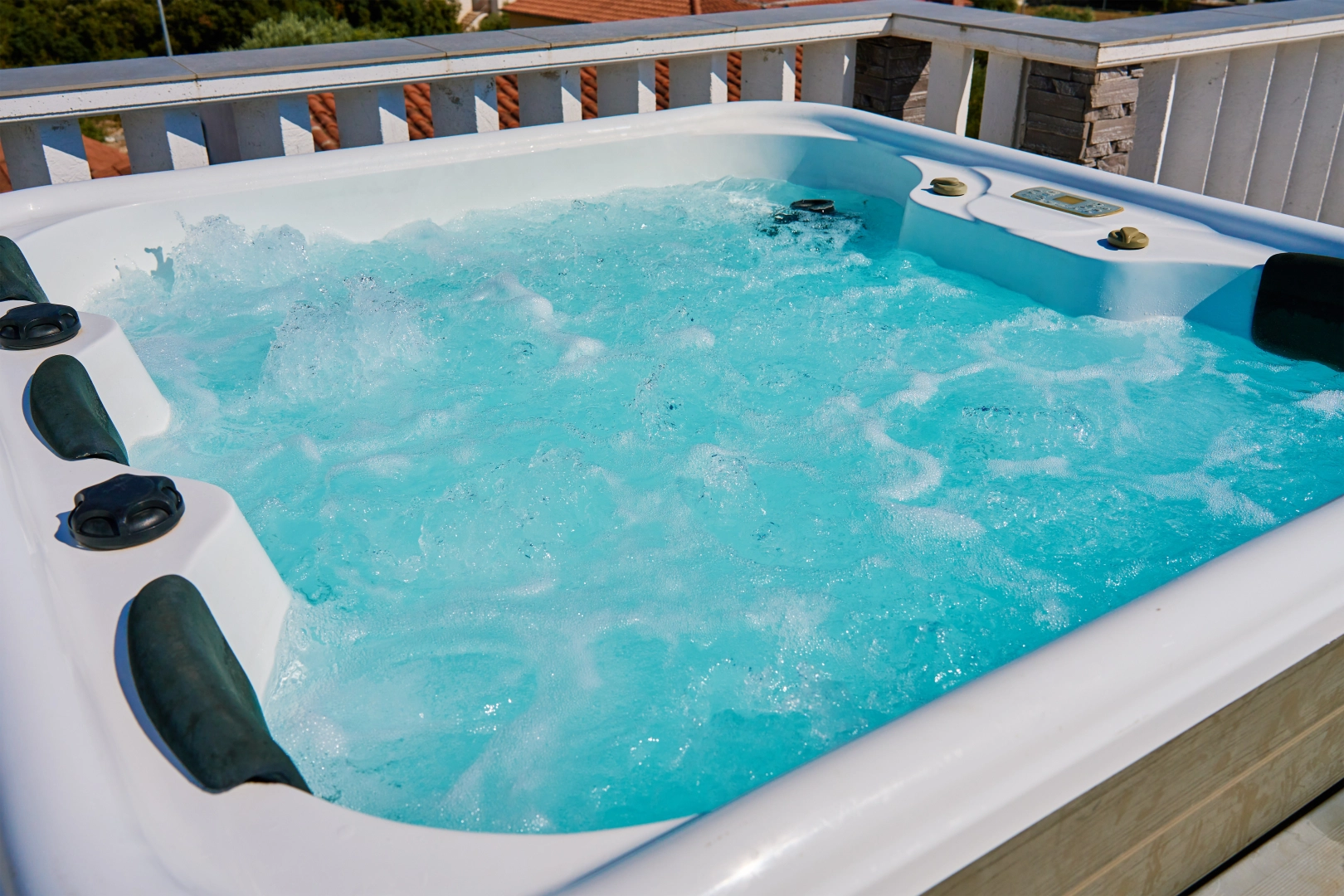
Low water levels often occur over a long period of time. Water can be lost through normal use, splash-outs, and evaporation, especially when the water is hot, and the cover is often open.
Windy weather can also increase the rate of evaporation, and a small leak can lower your water level over time. If the water drops below a certain line, the hot tub may end up pulling in air instead of water.
Trapped air (sometimes called an air lock) can appear after draining and refilling the tub, after cleaning the filter, or when the water level is too low.
When air travels through the system and sits in the pipes, it can block the water flow and cause issues like weak jets, loud gurgling sounds, and poor circulation. The hot tub will also take longer to heat up, and the temperature may keep dropping because the heater isn't getting enough water.
Scale build-up on the heater from hard water
A build-up of scale on the heater from hard water is one of the main causes of hot tub issues in the UK. In many parts of the country, tap water is “hard", which means that it contains higher levels of minerals - mainly calcium and magnesium.
When this water is heated up and circulated through a hot tub, those minerals can start to form a chalky coating called scale. Over time, this scale can cause several problems that affect your hot tub's comfort, safety, and running costs.
The heater is more at risk of scale damage because it runs hotter than the rest of the system. When the water warms up, the minerals are more likely to come out of the water and stick to the hot surface, and although a thin layer of scale may not seem like a big issue at first, it can quickly build up if the water balance isn't kept steady.
Water chemistry problems that damage parts over time
Hot tubs need more care than many people expect because the water is warm, used often, and kept in a closed system. When the water balance isn't right, it can quietly harm the hot tub’s components and cause error codes, leaks and system failures.
One key problem is the pH level being too high or too low. If the pH is too low, the water will become acidic, meaning that it will slowly eat away at the tub's metal parts, like the heater, pump seals, and fittings.
Acidic water can also damage the inside of the pipework over time, too. On the other hand, if the pH level is too high, the water can cause scale and deposits to form, which can block the pipes, coat the heater, and reduce your water flow.
The sanitiser levels matter too. If the chlorine or bromine level is too low, bacteria can begin grow and form biofilm inside the pipes.
Biofilm can be hard to remove, and it often causes issues like bad smells, cloudy water, and ongoing water problems. Likewise, if the sanitiser level is too high, it can irritate your skin and eyes, as well as cause the rubber seals and plastic to wear out faster than usual.
Hot Tub Engineers Surrey offer hot tub servicing in Guildford, Woking and Horsham to help keep your hot tub clean, safe, and ready to use. We can check your water flow, filters, heating, and key components, and fix any issues early on to prevent expensive breakdowns.


